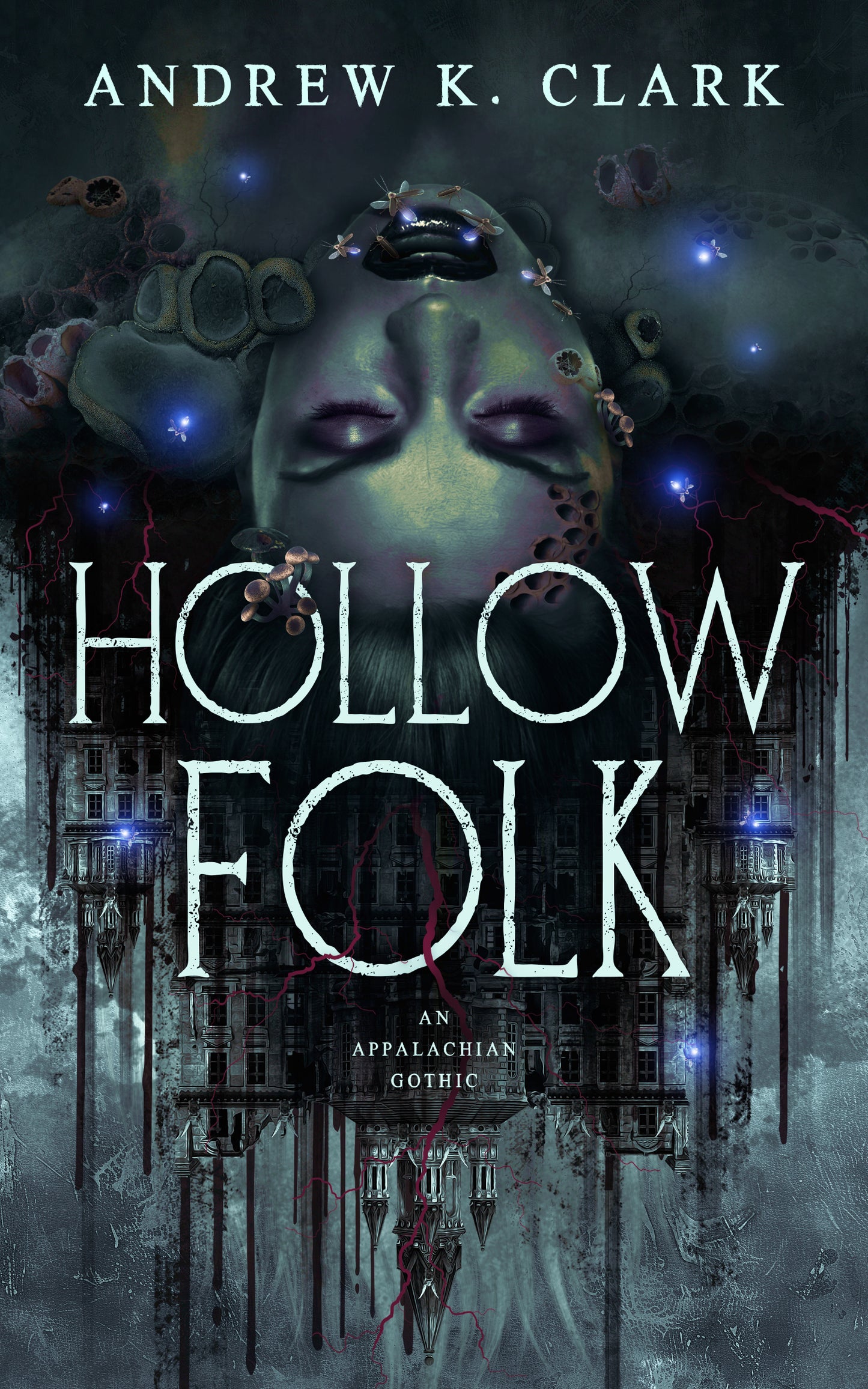
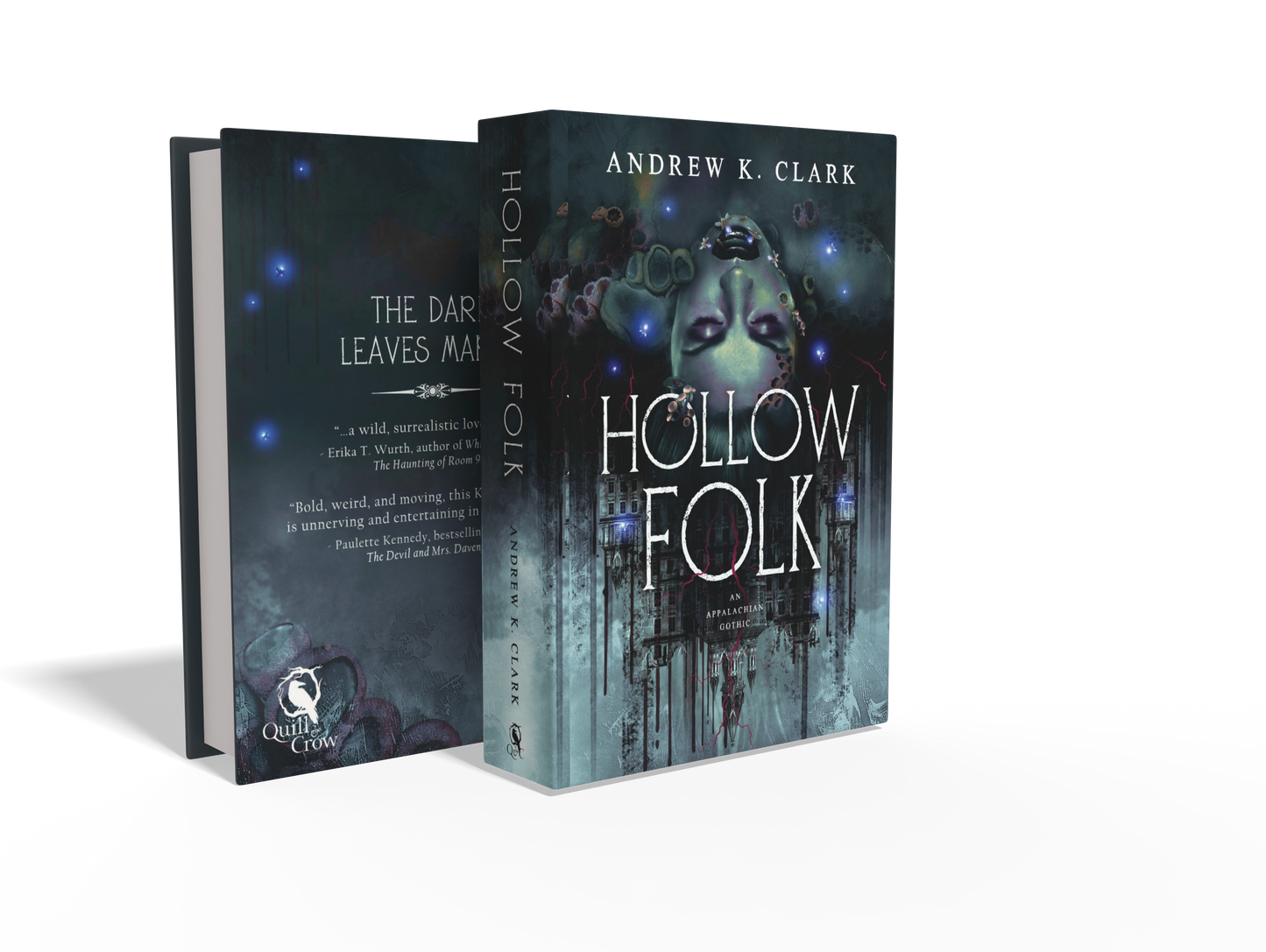
There’s a lot about Hollow Folk that I genuinely loved. Clark’s prose is strong, atmospheric, and frequently beautiful. More importantly, the Appalachian setting never feels like aesthetic window dressing. The novel is deeply rooted in the folklore, history, landscape, and cultural texture of Western North Carolina.
Having lived in North Carolina and maintained a longtime interest in Appalachian folklore and cryptozoology, I had an enormous amount of fun during the first third recognizing the breadcrumbs Clark was leaving behind. Before the book began naming some of its geographical influences more directly, the strange mountain lights, unnatural landscape, regional creatures, fungal imagery, and other details had already turned the setting into a puzzle I thoroughly enjoyed solving.
That authenticity remained one of the novel’s greatest strengths. Nothing about the folklore felt like an outsider grabbing Appalachian legends because they sounded spooky. Clark writes like someone who knows this landscape, its stories, and the relationship between the people, history, and land. The historical material concerning displacement, exploitation, religious oppression, misogyny, grief, and generational suffering is similarly woven into the supernatural elements rather than simply placed beside them.
My biggest issue was the character development, particularly in the first half. The opening spends considerable time establishing the Holloway, its mysteries, and surrounding lore. With only three central human characters, I initially found it frustrating that it took so long to feel like I knew them. Their characterization comes in small pieces, with much of the deeper development arriving only after the groundwork is complete.
Kal is perhaps the character I still wanted to know better by the end. We get glimpses of his family, cultural background, and extraordinary experiences outside the Holloway that suggest an incredibly rich character, but those moments are often brief before he returns to his role as the practical problem-solver who fixes things, provides information, and keeps the plot moving.
Teresa’s characterization also complicated my response. The novel is clearly interested in misogyny, female sexuality, religious oppression, and the punishment of women, yet for much of the first half Teresa is presented primarily through Ethan’s desire for her. We learn far more about how Ethan perceives her and what she represents to him than about Teresa herself. This does become important to the plot, and the second half finally reveals more of the real Teresa as she becomes increasingly central to the mythology surrounding the Seven and the Holloway. I loved those revelations and understood why some were delayed, but I still wished we had met more of that Teresa sooner.
Ethan receives the overwhelming majority of the novel’s interior attention. Clark develops him into a believable character who genuinely sees himself as a good guy while remaining deeply self-centered and frequently unpleasant. His fixation on Teresa was one of the areas where I found him least likable. At times it feels less like genuine intimacy and more like an obsession with a version of her he has constructed for himself. The novel does recognize that contradiction, and Teresa directly challenges his behavior, but the uncertainty surrounding the foundation of their relationship left me unsure how to feel about it until the end.
By the second half, however, I became much more invested in the characters and the small pieces of development that made them feel like people I cared about. The novel continued delivering imaginative supernatural developments, memorable body horror, historical revelations, and intriguing mythology. I did occasionally feel that events were happening to the characters more often than fundamentally changing them, so Ethan’s later moments of self-reflection were especially welcome.
The ending cemented my overall take. There are fascinating ideas here about transformation, autonomy, desire, the supernatural, and real local lore. I initially expected the conclusion to lean closer to a good-for-her horror ending, but it did not, and the final resolution ultimately fit the story well.
I was also lucky enough to chat with Clark afterward about the novel, including the inspiration behind the Holloway’s location and an area we are both familiar with. The extra context immediately prompted a reread so I could catch some of the hidden gems I had missed the first time.
Hollow Folk has excellent atmosphere, strong prose, memorable imagery, and some of the most authentic Appalachian folklore I’ve encountered in recent horror. I had early issues with the character development, but overall I still thought this was a fantastic read, and the world Clark created is going to stick with me for a while.